The Death of the Org Chart — Building Teams Around Problems, Not Titles
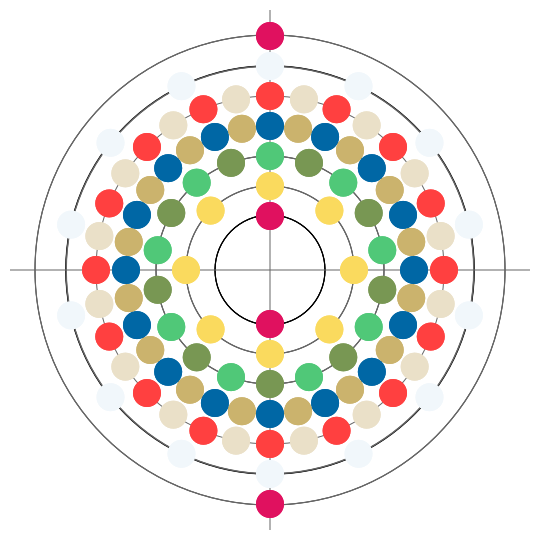
<div class='bc_element' id='bc_element1' style='width:auto;padding:5px;max-height:100%;'><span><p data-start="250" data-end="271"><span style="font-size: 17.5px;">The Org Chart Is Dead. </span><span style="font-size: 17.5px;">The Future Belongs to Teams That Form Around Problems, Not Titles.</span></p><p>In creative industries, work doesn’t care about your department.</p><p data-start="675" data-end="831"> It cares about who can solve the problem fastest, smartest, and together.</p><p>BCG’s latest research found that project-based, flexible team models outperform traditional hierarchies by 35% in creative output.</p><p data-start="838" data-end="1036"> Why? Because problems don’t fit into departments.</p><p>The best companies don’t build pyramids.</p><p data-start="1043" data-end="1188"> They build <em data-start="1111" data-end="1124">ecosystems.</em><br data-start="1124" data-end="1127"> People move fluidly between responsibilities , not job descriptions.</p><p> </p><p>Think of it like a jazz band.</p><p data-start="1195" data-end="1350"> No fixed roles, no static plan.<br data-start="1272" data-end="1275"> Everyone listens, improvises, leads, and follows depending on the song.</p><p> </p><p>Titles create silos. Problems create unity. When teams rally around challenges instead of hierarchies, politics disappears and purpose takes over.</p><p> </p><p>The future org chart will look less like a structure —</p><p data-start="1530" data-end="1680"> and more like a network diagram of <em data-start="1636" data-end="1678">who’s collaborating with whom right now </em></p><h2 data-start="1864" data-end="1922"><span style="font-size: large;">The most successful creative companies in 2025 are </span><em data-start="1975" data-end="2002" style="font-size: large;">anti-structure by design.</em></h2><p data-start="1924" data-end="2053"> They move talent where the problem is hottest. BCG calls this the “Networked Organization” — one where leadership is situational, not positional.</p><p data-start="2055" data-end="2227"> It’s what happens when people stop guarding titles and start solving.</p><p data-start="1530" data-end="1680">And that’s the big shift MAAD industries (Marketing, Analytics, Advertising, Design) can’t afford to miss:</p><p data-start="2229" data-end="2424"> Teams that move like startups inside companies that still look like corporations.</p><p data-start="1530" data-end="1680"><em data-start="1636" data-end="1678"> </em></p><p data-start="2426" data-end="2509">Ask yourself:<br data-start="2439" data-end="2442"> If your org chart vanished tomorrow, would your culture survive?</p><p data-start="1530" data-end="1680"><em data-start="1636" data-end="1678"> </em></p> <span></div>
Other stories
Newsletter
Join our newsletter for the latest insights, career opportunities, and expert tips in
Marketing, AI, Analytics, and Digital (MAAD). 

© - Copyright. All Rights reserved
Powered by